Back

Enhanced Security in IoT Based Systems Leveraging Machine Learning for Anomaly Detection

Developed a machine learning pipeline to detect and mitigate cyber-attacks in healthcare IoT systems
Dashboard Overview

Project Overview

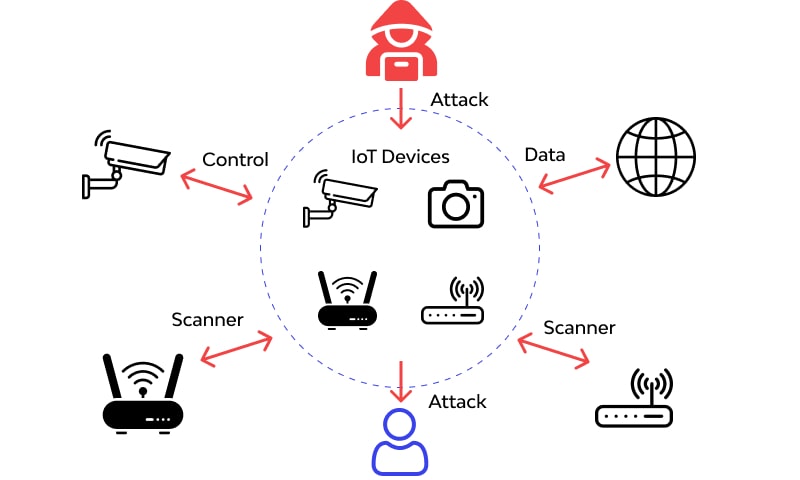
An end-to-end machine learning system designed to detect cyber-attacks in large-scale healthcare IoT networks. The project processes the CICIoT2023 dataset (42M+ records) and demonstrates how scalable data engineering and supervised learning can accurately distinguish between benign and malicious traffic under real-world constraints.

Model Architecture

System & Model Architecture

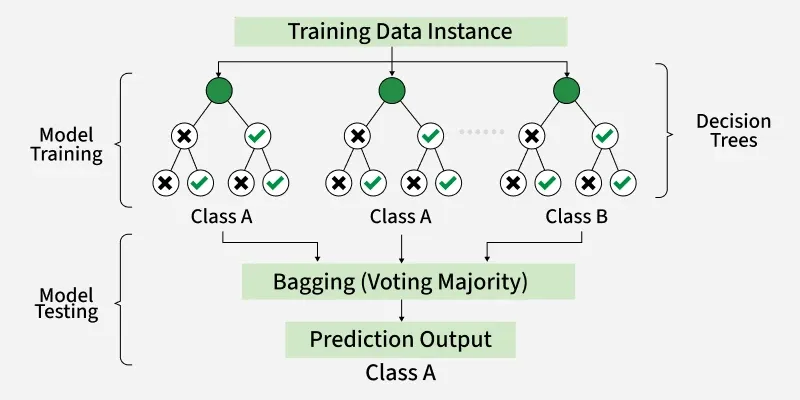
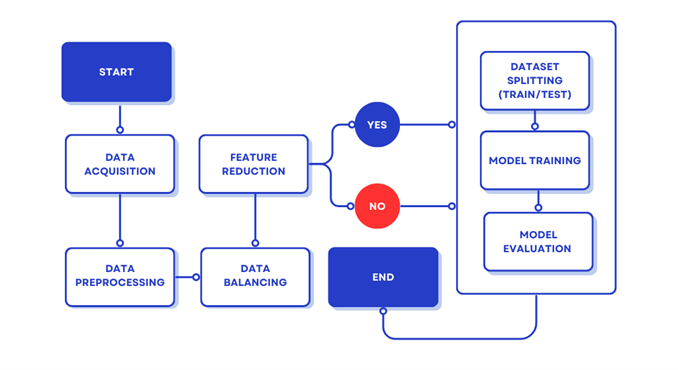
Illustrates the complete system architecture—from out-of-memory data ingestion using Dask and Parquet to feature engineering, class balancing, and multi-model training. The pipeline supports binary, multi-class (8), and fine-grained (34) attack classification, enabling a structured comparison of classical ML and deep learning models.

Training Metrics

Training & Evaluation Metrics

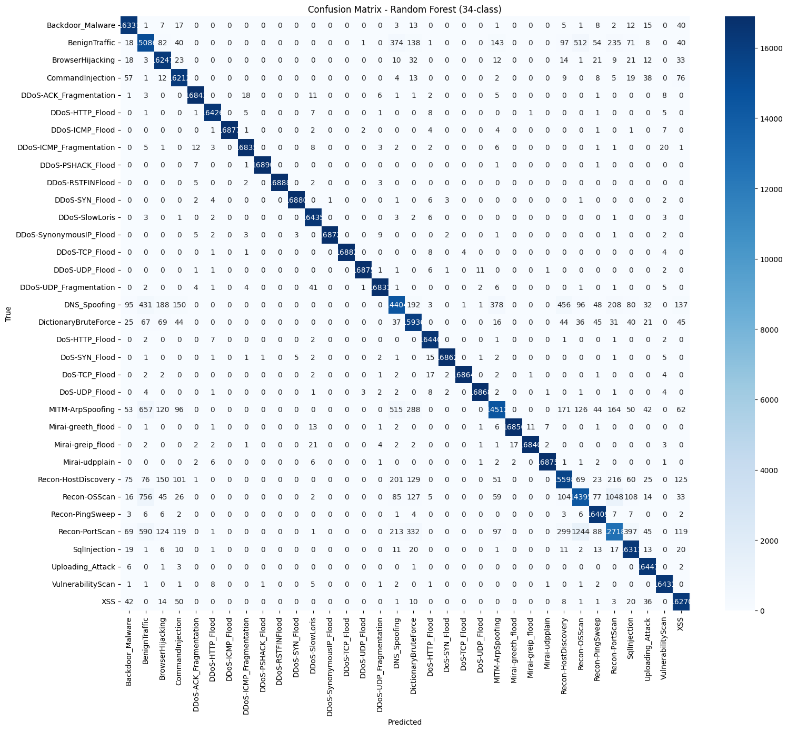
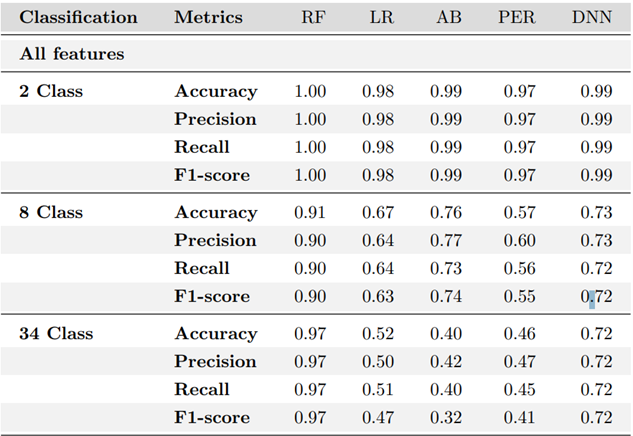
Displays training behavior and evaluation metrics across all models, including precision, recall, F1-score, and confusion matrices. The Macro Average F1-score is used as the primary metric to ensure fair performance comparison across balanced attack classes, especially in multi-class and fine-grained scenarios.

Real-time Analytics

Real-Time Threat Analytics

Demonstrates how trained models can be applied to real-time IoT network traffic for continuous anomaly detection. The system enables near-instant classification of network flows, making it suitable for healthcare IoT environments where fast detection is critical for operational safety and security.

Performance Insights

Key Results & Insights

Random Forest achieves the highest accuracy and robustness across all classification levels, while Deep Neural Networks show consistent generalization as task complexity increases. Linear models struggle with fine-grained attack detection, highlighting the need for non-linear architectures in real-world IoT security. These results reflect key engineering trade-offs and demonstrate the project's strong industry applicability.

1 / 5

Source Code

Explore the complete implementation, documentation, and code for this project on GitHub. The repository includes all datasets, notebooks, trained models, and deployment instructions.

View on GitHub

Technologies Used

Python Dask Pandas NumPy Scikit-learn TensorFlow Parquet Machine Learning

Key Features

Large-scale IoT traffic processing (42M+ records), Memory-efficient pipeline using Dask & Parquet, Multi-level attack classification (Binary, 8-Class, 34-Class), Hybrid class balancing with SMOTE and downsampling, Comparative evaluation of ML and Deep Learning models

Impact

Enabled accurate detection of complex IoT cyber-attacks, Reduced memory usage by ~70% through optimized data handling, Improved robustness of intrusion detection across multiple attack granularities, Demonstrated practical deployment feasibility on resource-constrained platforms

Timeline

Duration: 2 months, Status: Completed, Last Updated: December 2024